
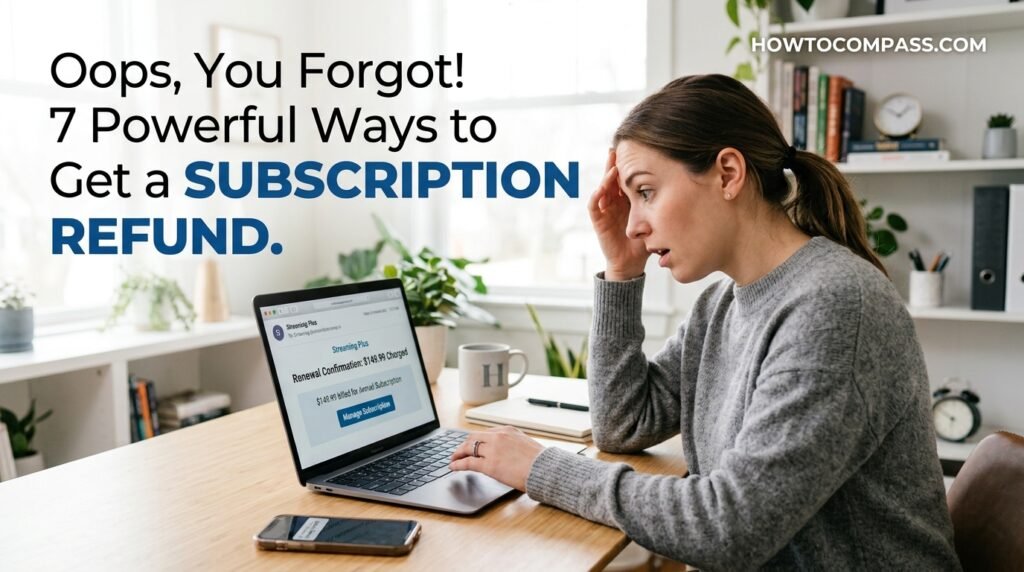
How to Get a Subscription Refund After Forgetting to Cancel
You may still be eligible for a subscription refund even if you forgot to cancel a service before its renewal date. Whether you can get your money back depends on the company’s refund policy, the circumstances of the charge, your payment method, and the consumer-protection rules that apply in your country. The good news is that a recent renewal does not always mean your money is gone for good.
Many people sign up for a free trial, monthly membership, streaming service, software plan, cloud storage account, fitness app, or online service and simply forget about it. Then one day, they check their bank or card statement and discover a renewal they did not expect.
Before assuming there is nothing you can do, follow these steps.
1. Cancel the Subscription Immediately
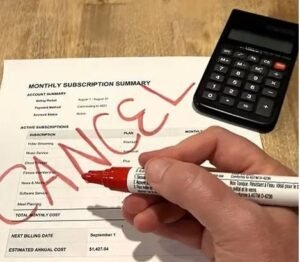
The first thing to do after discovering an unexpected renewal is to cancel the subscription.
Do not wait while you decide whether to request a refund. Cancelling immediately can help prevent another charge during the next billing cycle.
Log in to the service and look for options such as:
- Account
- Billing
- Membership
- Subscription
- Manage plan
- Cancel subscription
- Turn off auto-renewal
Take a screenshot of your cancellation confirmation, especially if the service shows a cancellation date or confirmation number.
The U.S. Federal Trade Commission recommends following the company’s cancellation instructions and keeping records of your cancellation request and communications. It also advises consumers to monitor their statements after cancellation. (Consumer Advice)
Why you should cancel first
A refund request does not necessarily cancel a subscription. You could receive a refund for one renewal and still be charged again later if auto-renewal remains active.
So think of these as two separate actions:
Cancel future billing + request a refund for the recent charge.
Do both.
2. Check the Company’s Refund Policy
Before contacting customer support, find out what the company’s terms say about refunds.
Search the website for:
Refund Policy
Cancellation Policy
Billing Terms
Subscription Terms
Terms of Service
Look for information about:
- Recently renewed subscriptions
- Accidental renewals
- Free trials
- Cooling-off periods
- Partial refunds
- Unused subscription periods
- Annual plans
- Monthly plans
- Digital services
- Auto-renewals
This matters because many businesses distinguish between cancelling a subscription and qualifying for a refund.
For example, a company may allow you to cancel at any time but state that payments are normally non-refundable. That does not necessarily mean you should not ask. A company can still make an exception, particularly when the renewal was recent and you have not used the service.
In the UK, MoneyHelper notes that consumers who forget to cancel a contract that automatically renews should check whether a cooling-off period applies and, where applicable, ask for a full refund. (MaPS)
3. Ask for the Refund as Soon as Possible
Timing can make a major difference.
If you notice the charge today, contact the company today rather than waiting several weeks.
Your message should be:
Polite, clear and specific.
Explain that:
- You forgot to cancel before the renewal.
- You noticed the charge recently.
- You have now cancelled the subscription.
- You have not intentionally continued the service.
- You would like the recent payment refunded.
Here is a simple message you can adapt:
Subject: Refund Request for Recent Subscription Renewal
Hello,
I recently noticed that my subscription renewed and my account was charged. I had forgotten to cancel the subscription before the renewal date and have now cancelled it to prevent future charges.I would kindly like to request a refund for the recent renewal. I have not intentionally renewed the service and would appreciate your consideration.
Thank you for your help.
Avoid sending an angry message, even if you are frustrated.
Customer support is often more willing to help when the request is reasonable and straightforward.
4. Explain That You Haven’t Used the Service
One of the strongest details you can include in a refund request is whether you have used the subscription since the renewal.
Suppose you were charged $99 for an annual software subscription, noticed the charge two days later, and have not opened the software since it renewed.
Tell the company.
You could say:
“I noticed the renewal shortly after the charge and have not used the service since the renewal date.”
That gives the company an additional reason to consider reversing the transaction.
Of course, this is not a guarantee. The company’s terms may still apply.
For some services, unused time can also matter. For example, Australian consumer guidance says that where a subscription service cannot be accessed, businesses generally should not continue charging consumers for periods in which the service cannot be used; Australian consumer guarantees can also provide remedies in certain circumstances. (ACCC)
The important lesson is simple:
Tell the truth about your usage.
Do not claim that you never used a service if you did.
5. Escalate Your Request if Customer Support Says No
Your first refund request may be rejected.
Don’t immediately assume that is the final answer.
Ask whether your request can be reviewed by a supervisor, billing specialist, or another customer-service representative.
You could respond:
“I understand your refund policy. However, since the renewal was recent and I have now cancelled the subscription, could you please review this as a one-time refund exception?”
The phrase “one-time refund exception” can be useful because you are not demanding that the company rewrite its entire refund policy. You are asking whether it can make an exception based on your circumstances.
You should remain respectful throughout the process.
Keep copies of:
- Emails
- Chat conversations
- Receipts
- Cancellation confirmations
- Screenshots
- Billing statements
These records may become important if you later need to challenge the charge.
The FTC specifically recommends keeping records related to cancellation and communications concerning subscription charges. (Consumer Advice)
6. Contact Your Bank or Card Provider When Appropriate
What happens next depends heavily on why you were charged.
There is an important difference between:
“I forgot to cancel a subscription I originally authorized.”
and
“I cancelled the subscription, but the company charged me anyway.”
There is also a difference between an expected renewal and a charge you genuinely did not authorize.
For example, if you already cancelled a subscription and the company continued charging you, you may have a stronger basis for disputing the transaction with your card issuer.
The FTC advises consumers who continue to be charged after cancelling a subscription to contact their credit or debit card company and use its dispute process. (Consumer Advice)
In the United States, the Consumer Financial Protection Bureau also states that consumers can revoke authorization for automatic payments from a bank account and recommends contacting the company and following up in writing. (Consumer Financial Protection Bureau)
Important warning
Do not automatically tell your bank that a legitimate subscription was “fraud” simply because you forgot to cancel it.
A charge can be unexpected without being unauthorized.
Be accurate when describing the transaction to your bank or payment provider. Your dispute rights and procedures can vary depending on the country, account type, payment method and circumstances.
7. Check Your Bank Statements for Other Forgotten Subscriptions
Getting one refund is great, but discovering why the charge happened can prevent the same problem from happening again.
Go through the last few months of your:
- Credit card statements
- Debit card statements
- Bank statements
- PayPal or other payment accounts
- Apple or Google purchase history
- App-store subscriptions
Look for recurring charges you no longer recognize or use.
You may discover subscriptions you completely forgot about.
MoneyHelper recommends regularly reviewing recurring payments because automatic payments can be easy to forget. It notes that regular payments can often be viewed through bank statements, online banking or mobile banking. (MaPS)
Create a simple list containing:
| Subscription | Cost | Billing Date | Keep or Cancel |
|---|---|---|---|
| Streaming service | $15/month | 10th | Keep |
| Fitness app | $12/month | 18th | Cancel |
| Cloud storage | $100/year | June 4 | Keep |
| Software trial | $25/month | 27th | Cancel |
This small exercise can prevent hundreds of dollars in forgotten charges over time.
What If the Company Refuses Your Subscription Refund?
Sometimes the answer will simply be no.
A company’s refund policy may not provide a refund for an accidental renewal, particularly when you continued using the service after the renewal.
That does not necessarily mean the company has done something unlawful. Consumer rights are different from voluntary refund policies, and the rules vary between countries and types of contracts.
However, there can be situations where stronger rights apply.
For example, Australian consumer law provides consumer guarantees for goods and services and can provide cancellation or refund remedies when certain legal requirements are met. (ACCC)
Likewise, rules surrounding subscriptions, automatic renewals and cancellation can differ in the US, UK, EU, Australia and other jurisdictions.
So before telling readers that they are legally entitled to a refund, always check the rules that apply to their location and the particular service.
Can You Get a Refund for an Annual Subscription?
Yes, you may be able to—but it depends on the service and circumstances.
Annual subscriptions can be more expensive than monthly plans, so an unexpected renewal can be especially frustrating.
Start by checking:
- When the renewal happened
- Whether you have used the service
- The company’s refund policy
- Whether there is a cooling-off or cancellation provision
- Whether the service was purchased directly or through an app store
- Which country’s consumer rules apply
If the renewal happened very recently, make your request immediately.
Your chances may be better when you can show that the renewal was accidental and that you have not meaningfully used the service since the charge.
How to Prevent Another Unexpected Subscription Charge
The best subscription refund is the one you never need to request.
After dealing with the current charge, build a simple system for managing subscriptions.
Set calendar reminders
Create a reminder several days before an annual subscription renews.
For example:
“Adobe subscription renews June 15 — review June 8.”
Review subscriptions monthly
Choose one day each month to review recurring payments.
Cancel services you no longer use
Don’t keep paying simply because you might use something “one day.”
Turn off automatic renewal when appropriate
Some services allow you to continue using your subscription until the paid period ends after auto-renewal is switched off.
Keep cancellation evidence
Save the confirmation email or screenshot.
This can be especially useful if you are later charged after cancelling.
Final Thoughts
Forgetting to cancel a subscription can be an expensive mistake, but one unexpected charge does not mean you should immediately give up on getting your money back.
Start by cancelling the service, checking the refund terms, and contacting the company as quickly as possible. Be honest about what happened, explain whether you have used the service since renewal, and politely request a one-time refund.
If the company refuses and you believe the charge may have been processed incorrectly—for example, you had already cancelled but were charged again—review the dispute process available through your payment provider. (Consumer Advice)
Most importantly, remember that subscription refunds are not governed by one worldwide rule. Your rights can depend on your country, the type of service, the payment method and the company’s terms.
The next time you discover an unexpected renewal, don’t panic. Act quickly, keep your records, and ask. You may have more options than you think.
Frequently Asked Questions
Can I get a subscription refund if I forgot to cancel?
Possibly. A refund is not automatically guaranteed just because you forgot to cancel, but some companies offer refunds for recent accidental renewals or make one-time exceptions. Check the provider’s policy and contact them as soon as possible.
Should I cancel before asking for a refund?
Yes. Cancel the subscription first to help prevent future charges, then request a refund for the recent payment.
What if I was charged after I already cancelled?
Keep your cancellation confirmation and contact the company immediately. Depending on the circumstances, you may also be able to dispute the transaction with your card issuer or payment provider. (Consumer Advice)
Can my bank cancel a recurring payment?
In some circumstances, yes, but the process depends on the country and payment method. In the US, the CFPB states that consumers can revoke authorization for certain automatic payments from a bank account and recommends contacting the company as well as the bank. (Consumer Financial Protection Bureau)
How quickly should I request a refund?
As soon as you notice the charge. A prompt request gives the company less time to argue that you knowingly continued using the service after renewal.